Past Members
1 2 3
 Dr Stuart Thomson
Stuart was born in Ayrshire, Scotland and graduated with an MSci Chemistry & Physics from the University of St Andrews in 2013. In 2010 he undertook a summer project with the group on the measurement of charge transport in organic solar cell materials and in January 2013 continued this work for his Masters project. In September 2013 he re-joined the group for his PhD and is investigating organic solar cells using magnetic resonance techniques.
 Dr Yun Long
Yun was born in Jiangxi, in China and emigrated to England in 1994. She gained a BA and MSci in Physics from the University of Cambridge (Fitzwilliam College) in 2012, and went on to receive an MSc in Photonics and Optoelectronic Devices from the University of St Andrews (jointly with Heriot-Watt University). In the summer of 2011, she carried out a project with the Quantum Optoelectronics Group at Cambridge University investigating the cavity photon and exciton modes in semiconductor microcavities in order to characterise them for creation of exciton polaritons. Having joined the Organic Semiconductor Optoelectronics Group as a PhD student under the supervisor of Prof. Ifor Samuel in 2013, her research looks into exciton diffusion in organic semiconductors used in solar cells, focusing chiefly on methods used to measure the exciton diffusion length.
 Dr Shinto Varghese
Shinto was born and bought up in Kerala, India. He had his Ph. D. (2011) in Physical chemistry from the National Institute for Interdisciplinary Science and Technology (NIIST), CSIR, Kerala. Subsequently, moved to IMDEA Nanociencia, Madrid to work on Exciton coupling and dynamics in luminescent molecular crystals. Shinto was a Marie Curie Intra European Fellow (IEF) in the group, investigating the prospects of the electrically pumped lasers by indirect and direct injection methods. He was also involved in the investigation of exciton diffusion in molecular crystalline and polymeric materials.
 Dr Paulina Morawska
Paulina graduated from Gdansk University of Technology in Poland in 2011 with a MEng in Applied Physics. For her Masters project she completed an investigation into the study of electromodulation of exciplex fluorescence in organic films. She joined St Andrews in January 2012 to start a PhD in organic polymer lasers for use as explosives sensors in the TIRAMISU project under the supervision of Prof Graham Turnbull and Prof. Ifor Samuel. After completing her PhD Paulina moved to a secondment at Helios Photonics.
 Dr Ashu Kumar Bansal
Ashu was born in Saharanpur in India. He received M.Sc in physics from Indian Institute of Technology (IIT) Roorkee and M.Tech. in applied optics from Indian Institute of Technology (IIT) New Delhi. After this for a brief period he has worked on Fibre Bragg Grating (FBG) sensors as a project assistant in central scientific instruments organisation, Chandigarh. Then he moved to Germany to obtain his Ph.D. in physics at University of Regensburg under the supervision of Prof. Alfons Penzkofer on spectroscopic characterisation of organic electroluminescent materials. In June 2008 Ashu has joined the Organic Semiconductor Optoelectronics group as a research fellow and since then he has been involved in various projects, which include photophysical characterisation of materials to device fabrication and applications of organic electronic devices in biomedicine. After leaving the group he became a project Manager at Techcomp Research and Engineering Centre.
 Dr Bernd Ebenhoch
Bernd was born in Isny, southern Germany, where he also did his diploma in physics at the University of Applied Sciences nta. After spending two years in industry working on the characterization of X-Ray detectors Bernd moved back to academia, studying for a Masters in photonics at the University of Applied Sciences in Munich. In 2010 he joined the group under Dr Graham Turnbull to complete his Masters project on organic lasers. Bernd then stayed on with the group by starting a PhD in organic solar cells under the supervision of Prof. Ifor Samuel, investigating device fabrication with novel organic semiconductors to improve solar cell performance. After leaving the group Bernd has gone on to do postdoctoral research at the Karlsruhe Institute of Technology.
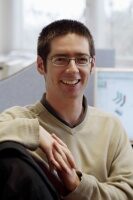 Dr Gordon Hedley
Gordon was born and brought up in Stranraer in south west Scotland. In 2005 he received an MSci degree in Physics from the University of Durham. His Masters year project at Durham was investigating the dynamics of new OLED compounds and it was here that he first became enthused by the field of chemical physics. He joined the Organic Semiconductor Optoelctronics group here in St Andrews in September 2006 under the supervision of Prof. Ifor Samuel to commence study for a PhD on the ultrafast photophysics of iridium complexes. After completing his PhD Gordon stayed with the group, looking at the photophysical properties of organic systems. Outside of the lab Gordon’s interests include history, technology and the dynamic between the two, wiki’s and how collaborative development can operate in a scientific environment. Gordon is now conducting postdoctoral research at the University of Regensburg in the group of Prof. John Lupton, also an alumnus.
 Dr Mithun Chowdhury
Mithun was born and brought up in suburban Kolkata (Calcutta, India). In 2008 he received an MSc degree in chemistry with specialization in physical chemistry from the University of Calcutta. During his masters he briefly worked at Saha Institute of Nuclear Physics Kolkata and University of Hyderabad, mainly on the magnetic/optical properties of inorganic/organic nanoparticles. Then he moved to University of Freiburg, Germany to obtain his PhD in polymer physics on 2012 working with Prof. Gunter Reiter on properties of glassy polymer thin films. Here he developed a great interest on soft matters at the surface and interfaces. In 2012 he was awarded Dr. rer. nat. and subsequently moved to Trinity College Dublin as a postdoc to work on the nanomechanical studies on polymer thin films with Dr. Graham Cross. Mithun joined the group in March 2014, working as a postdoctoral research fellow with Prof. Ifor Samuel. His area of work here lies on the role of preparation condition and post-processing on conjugated polymer films finally aiming towards its exciton diffusion and solar cell applications. Whether in science or beyond he is interested in traveling and doing collaborative activities. After leaving the group Mithun took up a postdoctoral position at Princeton University.
 Dr James Stevenson
James was born in Edinburgh, Scotland. He graduated with an MPhys in physics with photonics from the University of St Andrews in 2011. During his undergraduate studies he was a participant in the organic electronics and applications erasmus intensive program in 2010 and carried out his masters project on electrospinning of polymer nanofibres under Dr Graham Turnbull. James joined the group in 2011 to study for his PhD with the intention of continuing work on electrospinning of semiconducting polymers and working on polymer lasers. After leaving the group, James went on to work for Selex.
 Dr Scott Pearson
Scott graduated with an MPhys in physics from the University of St Andrews in 2011. In the summer of 2010 he examined organic semiconductors using single molecule spectroscopy with the Organic Semiconductor Optoelectronics and Single-Molecule Biophysics groups. In September 2011 he started a PhD continuing his Masters investigation of charge recombination and photophysical properties of organic solar cells under the supervision of Prof. Ifor Samuel. After completing his PhD Scott has gone on to work for Selex.
 Dr Tom Wood
Tom was born in Malvern, England, and studied for his undergraduate degree of ‘Physics with Study in Europe’ jointly at the University of Manchester and Universite Joseph Fourier in Grenoble, France. Following the end of his Masters in 2009, he moved to France to carry out his PhD studying photonic transducers for gas sensing in the Im2np lab at Aix Marseille Universite, with several placements at Universidade do Sao Paulo in Brazil. Having completed his PhD, Tom remained in the same group in Marseille until the end of 2013 for an initial post-doctoral position characterising organic semiconductors for solar cell applications by optical means including ellipsometry and integrating sphere photometry. During 2014, he worked at City University of Hong Kong performing optical measurements including time-resolved photoluminescence and Raman spectroscopy on nanostructured semiconductors, as well as engaging in nanofabrication activities. In April 2015, Tom started working at the University of St Andrews as a Research Fellow on the UP-VLC project for visible light communications, where his responsibilities included the simulation, fabrication and characterisation of nanostructured grating elements.
 Dr Andrew Matheson
Andrew was born in Inverness and grew up on the Black Isle in the Scottish Highlands. He studied physics at the University of Edinburgh from 2006, graduating with an MPhys in 2011. He joined the group in September 2011 to start a PhD studying the photophysics of organic solar cells, initially focussing on polaron generation, under the supervision of Prof. Ifor Samuel. Andrew is now a Postdoctoral Research Associate at the University of Edinburgh.
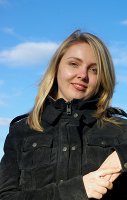 Dr Olena Kulyk
Olena obtained BSc and MSc in Physical and Biomedical Electronics at NTUU ‘KPI’ in Kiev. She worked on inorganic semiconductors during her BSc in Kiev and near-field micro-probing during her MSc at ECIT, Queen’s University of Belfast. Before coming to the group for a PhD, Olena worked on electronic circuits for critical systems at the Kiev Design Bureu. Her research interests while in the group included light-tissue interactions, skin optics and phantoms, optoelectronic design and engineering, computer simulations and fluorescence imaging for Photodynamic Therapy (PDT) for skin lesions. Beyond her research she enjoys keeping fit, dancing, travelling, cooking and socialising. Olena went on to work at ELI, a European programme to develop advanced lasers.
 Dr Iain Robertson
Iain is from the Isle of Skye. He graduated from the University of St Andrews with an MSci in Materials Science in 2011. His studies included a year in the Swiss federal materials research lab EMPA, working on solid oxide fuel cell (SOFC) electrode nanostrucutres, and a Master’s project on a computational method for nano crystal structure determination from XRD data. His other interests include reading, woodworking and playing badminton. After leaving the group Iain joined the leading patents agency Marks and Clerk.
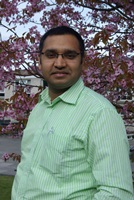 Dr Gopala Krishna Thalluri
Gopala Krishna Thalluri was born in a Hyderabad, India. In 2007, he received MSc (Engg) degree in Microsystems Integration Technology from Chalmers University of Technology , Sweden. Then he moved to Belgium in 2008 to obtain PhD. in physics at University of Hasselt, Belgium under the supervision of Prof. Jean Manca on preparation and characterization of hybrid solar cells. In 2012, he started as a postdoctral researcher at Laboratory of Structural Inorganic Chemistry (LCIS) and the Group of Research in Energy and ENvironment from MATerials (GREEnMat), University of Liege, Belgium on investigating the dye-sensitized solar cells for a special light guide application. In March 2014, he joined the group as a research fellow working on preparation and characterization of organic solar cells. After leaving the group Gopala joined Helios Photonics.
 Dr Hien Nguyen
Hien was born in Hanoi, Vietnam. She received her BSc degree in Chemistry from the Vietnam National University in 2002. She then moved to Leeds and studied for both her MSc and PhD in Chemistry at the University of Leeds. After finishing her PhD in 2007 she moved to City University London, working as a Research Fellow on the development of fibre optic chemical sensors for several years before moving to St Andrews. Hien joined the team at the Organic Semiconductor Centre in October 2012. After leaving the group Hien went on to conduct postdoctoral research at City University, London.
 Dr Shuyu Zhang
Shuyu was born in Suzhou, China. He completed his undergraduate studies at Soochow University with a major in Physics in 2007 and his master studies at Fudan University with a major in Plasma Physics in 2010. In September 2010, he joined Prof. Samuel’s group here at the University of St Andrews to research organic optoelectronic devices for his PhD. He earned a PhD title in May 2014 with the thesis title of ‘Directional organic light-emitting diodes using photonic microstructure’. After working in the group as a Research Fellow mainly on the EPSRC project ‘Ultra-parallel visible light communications’, Shuyu went on to Fudan University, Shanghai where he is now an assistant professor.
 Dr Sanjay Ghosh
Sanjay studied M. Sc. (Physics) from Sant Gadge Baba Amravati University, India. Thereafter he qualified the National Eligibility Test for lectureship and joined the Department of Physics, North Maharashtra University, India as an Assistant Professor. After completing Ph. D. from the University of Pune in June 2013. He joined the organic optoelectronics research group at the University of St. Andrews as a postdoctoral research fellow in January 2014 working in the field of organic solar cells. Sanjay returned to North Maharashtra University, where he is now an assistant professor.
 Dr Guohua Xie
Guohua studied for his BSc, M.Sci and PhD at Jilin University, Changchun, China. From September 2006 to July 2011, he studied and worked on OLEDs in the State Key Laboratory on Integrated Optoelectronics. His doctoral research projects were mostly related to integration of OLEDs on active matrix backplanes, such as LTPS and CMOS. After defending his PhD degree, he started an internship in department COMEDD at Fraunhofer IPMS, Dresden, Germany, from August 2011. During the whole year of 2012, Guohua carried out his postdoctoral research which was sponsored by Alexander von Humboldt Foundation and hosted by Prof. Karl Leo at both IAPP, TU Dresden and Fraunhofer COMEDD. In January 2013, he joined the group conducting research on OLEDs. He is now an Associate Professor at Wuhan University, China.
 Dr Fei Chen
Fei studied her MA at the Chinese University of Hong Kong and her PhD in laser physics at Université d’Angers, France. Her doctoral project was on dye-doped distributed feedback waveguide lasers. After finishing her PhD, she took up a postdoctoral position at Dublin City University. Since 2011, she had worked on an EPSRC project for developing fibre Bragg gratings based external cavity laser diodes for optical gas detection. She joined the OSC in November 2013 where research involved the study of photophysics, light amplification in light emitting polymers, and polymer lasers for explosive sensing. Fei is now an Assistant Professor at Nanjing University of Technology, China.
 Dr Zarifi Masri
Zarifi was born in Bandar Seri Begawan, Brunei Darussalam. He graduated from University of Nottingham with a BSc degree in Physics in 2004. In 2006, he received an MSc degree in Materials Physics and Applications from Loughborough University. His MSc research project focused on the investigation of high strain rate deformation behaviour of Nickel-Titanium shape memory alloy. He joined Prof. Ifor Samuel’s group in October 2010 to pursue a PhD on exciton diffusion and charge transport in organic solar cells. Zarifi’s other interests are playing football, badminton and squash.
 Dr Alex Ward
Alex was born in a village near Cambridge. In 2010 he graduated from Imperial College London with an MSci in Chemistry. For his year-long masters project, under the supervision of Dr Saif Haque, he studied a novel chemical process to manufacture cadmium sulphide inorganic nanocrystals directly within a semiconducting polymer, in the solid state. The optimisation of such a technique, it was hoped, would lead to increased efficiencies in hybrid polymer-nanocrystal solar cells. In 2010 he joined the Organic Semiconductor Optoelectronics group at St Andrews and investigated using photophysical techniques to calculate exciton diffusion lengths in organic semiconductors. In his spare time he enjoys going to gigs, drinking ale, playing squash and running. Alex was awarded the RSE Enterprise Fellowship and founded the spin out company Razorbill instruments.
 Dr Emiliano Rezende Martins
Emiliano is from Ituiutaba, Brazil. He graduated in Electrical Engineering from the University of Sao Paulo in 2005. Following this he received his MSc in Electrical Engineering in 2008 from the same university, with a thesis topic on modelling of the supercontinuum generation in photonic crystal fibres. He then joined the Erasmus Mundus Masters of Photonics in 2008. In the first year of this master he studied at the Royal Institute of Technology (KTH) in Stockholm and then moved to the University of St Andrews for his second year. He completed his master in 2010 with a thesis on microstructured silicon solar cells. Emiliano joined the Organic Semiconductor Optoelectronics group in 2010 under the supervision of Prof. Ifor Samuel to pursue his PhD on microstructured organic semiconductors and is now a professor at the University of Sao Carlos.
 Dr Calvyn Travis Howells
Calvyn was born in Johannesburg, South Africa. He graduated from the University of Strathclyde with a MSci in Physics. During his undergraduate studies he conducted two research projects. The first, was on the topic of Non-volatile two colour holographic data storage at the University of Muenster, Germany. The second, which was for his MSci degree, investigated the effects of BEC distributed uniformly in potentials created by counter propagating lasers. On completion of his studies at Strathclyde, he began a PhD within the Organic Semiconductor Optoelectronics group at the University of St Andrews, under the supervision of Professors Ifor Samuel and Graham Turnbull. Calvyn completed his PhD on the investigation of material and device design for organic photovoltaics and worked as a geophysicist for almost two years at CGG. He continues to research organic photovoltaics at Masdar Institute, Abu Dhabi, and is founder and CEO of De La Terre limited.
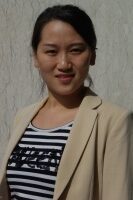 Dr Qin Xue
Qin received her BSc, MSc and PhD degrees from Jilin University, Changchun, China. From 2008 to 2011, she studied and undertook research on OLEDs in the State Key Laboratory on Integrated Optoelectronics, College of Electronic Science and Engineering, Jilin University. Her research focused on improving the performance of blue and then white OLEDs. Since July 2011, she has been appointed as a lecturer working for College of Physical Science and Technology, Central China Normal University. Under the sponsorship of China Scholarship Council, now Qin is a visiting scholar in Prof. Samuel’s group and investigating the photophysics of OLEDs.
 Dr Upendra Pandey
Upendra was born in Kushinagar in India. He received M.Sc. Electronics from DDU Gorakhpur University Gorakhpur and an M.Tech. in Opto-electronics from Shri GS Institute of Tech. & Science. Indore, Madhya Pradesh India. More than 3 years he has worked as a Senior Engineer, in Quantalase Ent. Pvt. Ltd. Indore, a laser based industry. He followed his passion towards organic electronics and did Ph.D. in Science and Technology of Mesosphase and Molecular Materials with the supervision of Prof. Attilio Golemme, University of Calabria, Italy. In January 2013 Upendra joined the Organic Semiconductor Optoelectronics group as a research fellow, using different novel organic semiconductors to improve solar cell performance. He has now taken up a position in the Interdisciplinary Centre for Energy Research.at the Indian Institute of Science.
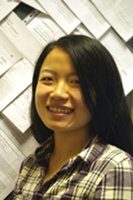 Dr Yue Wang
Yue was born in Hubei China in 1985. She graduated from the East China Normal University in Shanghai with BEng degree in Electronic Science & Technology in 2007. The following year she went on to receive an MSc degree in Photonics and Optoelectronic Devices jointly from the Universities of St Andrews and Heriot Watt. In September 2008 she joined the Organic Semiconductor Optoelectronics group to start a PhD under the supervision of Dr Graham Turnbull and Prof. Ifor Samuel. Her PhD research was on developing organic laser fabrication by nanoimprint lithography. In 2012 Yue completed her PhD and successfully won a EPSRC Doctoral Prize Fellowship to develop a novel multifunctional explosive sensing array here in the group. In 2013 she moved to the University of York as a postdoctoral researcher.
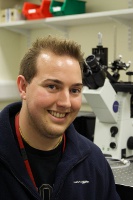 Dr Steven Quinn
Steve initially joined the Single-Molecule Biophysics lab during the summer of 2008 as a research student before completing his MPhys. degree in 2009. In both, he investigated the molecular basis of Alzheimer’s disease using novel fluorescence based techniques. After completing his undergraduate course in St Andrews, Steve moved to the University of Oxford and worked towards the MSc. by Research degree by developing new surgical tools for fluorescence based laparoscopy. In 2010, he returned to the group and to pursue a PhD in developing a biophysical toolbox for Alzheimer’s disease drug discovery under the supervision of Prof. Ifor Samuel and Dr Carlos Penedo. In 2013, Steve took up a BBSRC funded Postdoctoral Research post in Dr. Steven Magennis’ lab at the University of Glasgow, where he is currently investigating DNA replication at the single-molecule level.
 Dr Neil Montgomery
Neil graduated from the Lancaster University in 2008 with an MPhys in Physics. For his master’s project, he completed an investigation into the study of propagation and decay of quantum turbulence in superfluid helium-4. He joined St Andrews in September 2008 to start a PhD on polymer lasers under the supervision of Prof. Ifor Samuel and Dr Graham Turnbull. In 2012 Neil began working at the UK patent office as an examiner.
 Dr Salvatore Gambino
Salvatore Gambino received his first degree (MSc degree) in “Electronic and Telecommunication Engineering” from the University of Palermo (Italy) in 2001. The following year he was an INFM fellow at ENEA Research Center (Rome), working on realisation and characterisation of organic LEDs. Then he moved to the University of Palermo where he started his PhD working on charge transport properties of organic semiconductors using time of flight techniques. During his PhD he joined the Organic Semiconductor Centre here in St Andrews to carry out his research in collaboration with Prof. Ifor Samuel. In 2006 he received his PhD from the University of Palermo. The same year he was appointed research fellow at the department of Electronic Engineering (University of Palermo) working on organic solar cells. In 2008 he rejoined the Organic Semiconductor Optoelectronics group in St Andrews working on realisation and characterisation of dendrimer based organic light emitting diodes. In 2012 Salvatore took up a new position as a Senior Postdoctoral Researcher the The Italian Institute of Technology, continuing to work with organic semiconductors.
Past group member’s data is published here on the lawful basis of being a public task, and the purpose is to support the work of the research group. If you would like your data removed and/or ammended please contact [email protected] .
1 2 3