Past Members
1 2 3


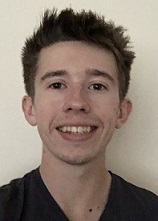
Peter Brown
Peter studied at the university of Warwick where he obtained an Mchem in 2019 under the supervision of Prof. Pat Unwin. His project revolved around optically visualising mass transport in nanopipettes with laser scanning. Currently, Peter is pursuing a PhD in Physics at the University of St Andrews with his research utilising time-resolved spectroscopy to investigate solution-based semi-conductors such as perovskites. He is co-supervised by Prof. Ifor Samuel and Prof. Eli Zysman-Colman. In his free time Peter enjoys playing tennis and strategy games.
Email: pb95

Dr Stefan Diesing
Stefan studied chemistry at the University of Cologne where he obtained a BSc at the end of 2016, as well as a MSc in 2019 working under the supervision of Prof. Dr. Klaus Meerholz. During his Bachelor and Master studies he investigated organic solar cells and charge carrier mobility in organic semiconductors. Stefan completed his PhD in Physics at the University of St Andrews in 2023. His research focused on next-generation thermally assisted delayed fluorescence materials co-supervised by Prof. Dr. Eli Zysman-Colman and Prof. Dr. Ifor Samuel.
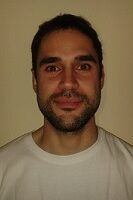 Dr Alfonso Brenlla
Alfonso graduated in chemistry at the University of Santiago de Compostela in northwest Spain. He obtained a PhD at the same institution investigating photoinduced electron and proton transfer reactions in small organic molecules. In late 2010 he moved to Wayne State University in Detroit where he investigated DNA polymerases by single-molecule fluorescence. He joined the group in April 2016 and his current research project involves the characterization of conjugated polymers by single-molecule techniques.
 Dr Jonathon Harwell
Jonathon is from Sussex, England and graduated with an MPhys in Physics from University St Andrews in 2014. In 2012 he worked with Dr Bansal and Dr Giardini on the fabrication of an optoelectronic muscle contraction sensor, with a view to use as an input device for prosthetic limbs. For his masters project he performed an investigation into the effects of strong coupling on organic light emitters in metal microcavities, with a focus on the effect on the energy of the light emitting singlet states. He started a PhD with Prof Ifor Samuel’s group in September 2014, and is working on the fabrication of solar cells using perovskites – a promising new class of material – and on Monte Carlo simulations for modelling exciton diffusion in crystalline materials.
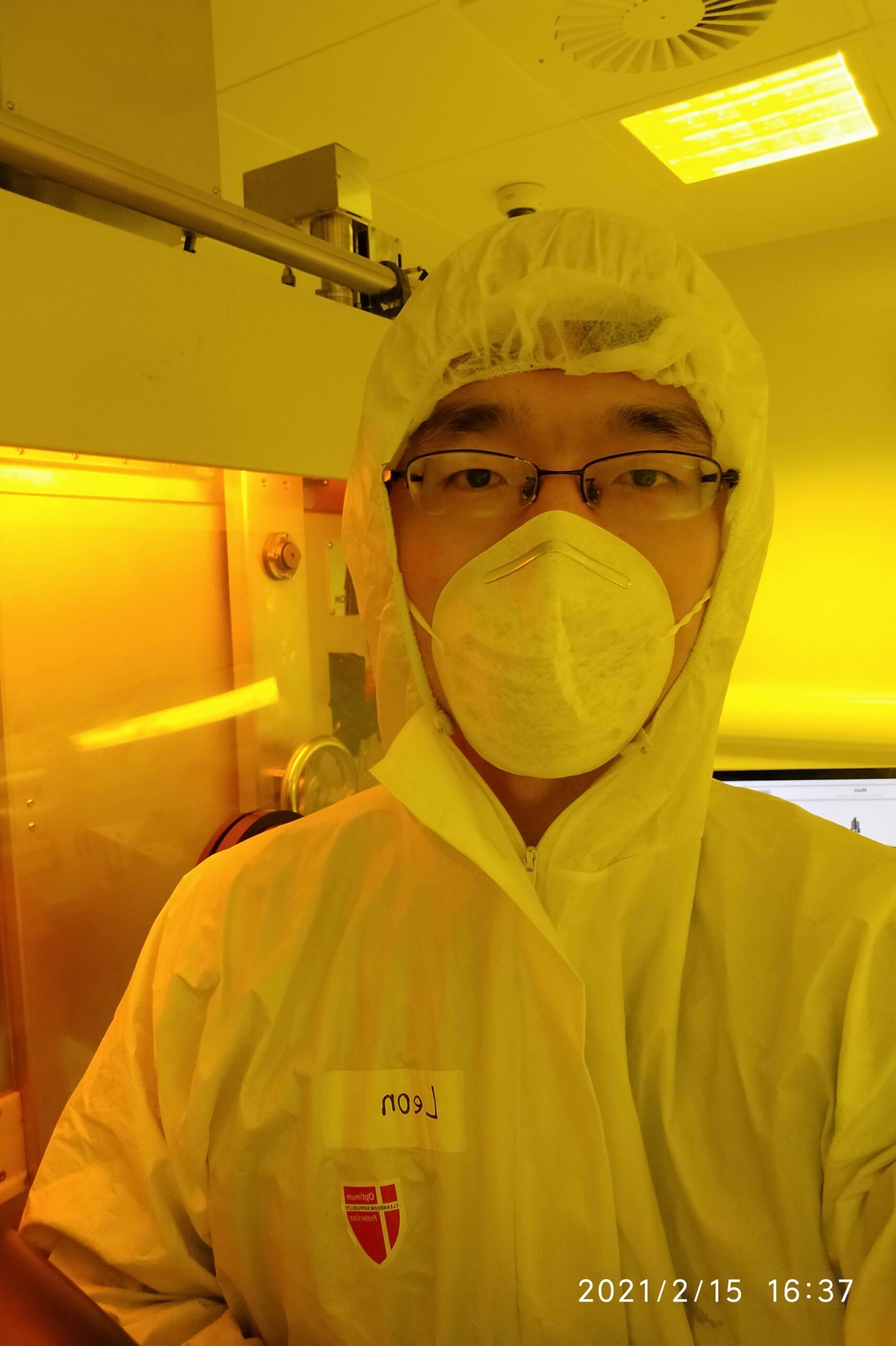 Dr Le (Leon) Zhang
Leon is from Shaanxi, China. He got his PhD degree in 2013 from Tokyo Institute of Technology with a focus on carrier transport in organic electronic devices by using time-resolved second-harmonic generation technique (prof. Iwamoto Mitsumasa). After that he spent one year in kyushu University on OLEDs (prof. Adachi Chihaya) and two years in Eindhoven University of Technology (prof. Reinder Coehoorn) on bimolecular interaction in phosphorescent organic host-guest thin films. Now, he is working on high efficiency long lifetime blue OLEDs and characterization methods.
 Dr Cheng Lian
Cheng is from Xiamen, China. He graduated with a BEng from Taiyuan University of Technology. Then he completed his MSc at Hong Kong Baptist University with a research project about developing large area organic light-emitting diodes for solid-state lighting. Cheng joined the group in October 2017 as a PhD student supervised by Prof. Ifor Samuel. His research mainly focuses on developing organic optoelectronics devices for medical applications.
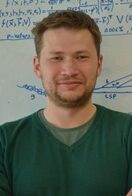 Dr Pavlos Manousiadis
Pavlos was born in Chernogorks, Russia. After completing his undergraduate studies in physics at University of Athens in 2005, he continued his studies and obtained M.Sc. degrees in I.T. and solid-state physics from the same university. His Ph.D. research was conducted in National Centre for Scientific Research “Demokritos”, in the area of silicon nanocrystals and their application in photovoltaics. In April of 2013, he joined the group as a research fellow and currently is working in the field of optical communications.
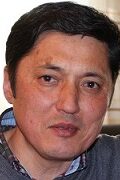 Dr Saydulla Persheyev
Saydulla was born in Tashkent, Uzbekistan. In 1995 completed his PhD working on the joint research project between Ioffe Institute (St Petersburg, Russia) and Tashkent State University (Uzbekistan). In 1997 he joined “Amorphous materials group” at Dundee University working on various projects linked to PECVD deposition and excimer laser processing of amorphous hydrogenated silicon for various applications such as solar cells, bio-sensors, detectors, THz emission etc. From 2005 to 2009 worked for the spin out company based in Dundee “Quantum Filament Technologies” working on the development of thin film Field Emission Displays based on excimer laser crystallised amorphous silicon films. In 2014 he joined the School of Physics and Astronomy, St Andrews University. His current research interests are non-invasive medical devices for treatment and diagnostics, development of novel organic light emitting diode (OLED) based light sources for photodynamic therapy (PDT) to treat parasite based and fungal infection skin diseases, biophotonics and biosensors.
 Dr Natalie Mica
Natalie is from Austin , Texas. In 2016 she completed her BSc with Honors from the University of Texas at Austin with a research project about the dynamics of phase separation in lipid membranes. Later that year she joined the group to study the fabrication of organic and hybrid solar cells using various photophysical measurements to understand why they do (or do not) work.
 Dr Wenbo Li
Wenbo hold a BEng degree (on Display Technology) from East China University of Science and Technology, Shanghai, China. He also graduated with a BSc (Hons) degree from the physics department in University Strathclyde, Glasgow, UK in 2015. From 2015 to 2016, he stayed in Strathclyde and joined the group of Dr Aidan Arnold and Dr Paul Griffin as a MRes student for an attempt to make a 420nm blue magneto-optical trap utilizing diffraction gratings so as to gain colder thermal atoms. He started a PhD in Prof. Ifor Samuel’s group in September 2016. His research now mainly focusses on thermally assist delay fluorescence (TADF) emitters for organic light emitting diodes.
 Dr Mengjie Wei
Mengjie is from Anhui, China and graduated from Shanghai University in March 2016 with an MSc in Microelectronics. During the two and a half years, she worked on a national project about the multi-wavelength amplified spontaneous emission from different kinds of micro-structures. In September 2016, Mengjie was offered a place as PhD student under the supervision of Prof Ifor Samuel and was sponsored by China Scholarship Council. Currently her research focuses on organic semiconductor polariton light emitters, especially on the strong coupling and polariton lasing phenomena of organic materials in microcavities.
 Dr Iain Campbell
Iain holds an Mphys degree from the University of St Andrews, he interned with the group throughout his degree, working with Dr Gillanders and Professor Turnbull on explosives sensing. He has now joined the group and is working towards his PhD; His research is focused on sensing applications of organic semiconductors, particularly explosives and biomedical sensing.
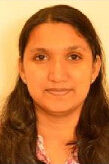 Dr Lethy Krishnan Jagadamma
Lethy Krishnan Jagadamma received her PhD in Physics from University of Strathlcyde, Glasgow. In 2012 she moved to KAUST, KSA to join Prof Amassian’s group as a postdoctoral fellow. Her research was mainly focussed on the development of solution processed interlayers for efficient organic optoelectronic devices. She joined the Organic Semiconductor group at St-Andrews as Research Fellow in September 2015. Her research interests are mainly solution processed and vacuum evaporated metal oxides for optoelectronic devices such as organic, QD, perovskite solar cells, and light emitting diodes.
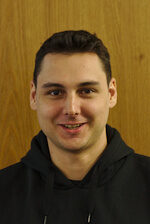 Dr Oskar Blaszczyk
Oskar graduated with a BSc in Physics from Imperial College London and an MSc in Medical Physics from University College London. In his Bachelors thesis he investigated the embodied energy of solar cells based on inorganic materials. In his Masters thesis he developed a theoretical model of the operation of an a-Se X-ray detector for a novel imagining method, coded aperture phase contrast X-ray imaging. In his PhD Oskar is looking at exciton diffusion with particular focus on how exciton transport can be controlled for optimising performance of optoelectronic devices and extending exciton diffusion length. Oskar enjoys sailing and martial arts.
 Dr Paloma dos Santos
Paloma received her bachelor and master’s degrees from Federal University of Minas Gerais (UFMG), Brazil. In 2014, she moved to the UK and pursued her PhD at Durham University under the supervision of Prof Andrew Monkman. Since October 2018, she is a research associate in St Andrews University. Her current project is a collaboration between the teams of Prof Ifor Samuel and Dr Eli Zysman-Colman and it involves the study of blue TADF emitters. Her research experience in organic materials ranges from steady state and time-resolved spectroscopies to device fabrication and testing (OLEDs).
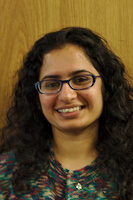 Dr Nidhi Sharma
Nidhi is from Dharamshala, Himachal Pradesh, a small state situated in the north of India. She completed her BSc (Hons) in chemistry from Panjab University Chandigarh, India and moved to Bangalore to undertake a masters degree at the Indian Institute of Science (IISc) Bangalore. Her masters project was to design synthesize and characterize materials which emit via thermally activated delayed fluorescence (TADF). Nidhi’s passion for luminescent materials has brought her to St. Andrews to work on new TADF emitters and finally to fabricate Organic light emitting diode (OLED) using these emitters. (Co-supervised with Dr. Eli Zysman Colman, School of Chemistry).
 Dr James Glackin
James is from Leigh, Lancashire and graduated from the University of Manchester with an MPhys degree in 2015. His masters project consisted of two smaller projects: building a solid state spectrometer for atmospheric measurements and modelling of random laser systems. James joined the group in September 2015 to start a PhD in explosive vapour sensors under the supervison of Prof. Graham Turnbull and Prof. Ifor Samuel.
 Dr Sai Rajendran
Dr. Sai Kiran Rajendran is a Research Staff at the School of Physics and Astronomy, University of St Andrews, working on the EPSRC Project Hybrid Polaritonics since November 2015. His current interests involve fabrication and engineering organic materials towards achieving strong coupling in planar microcavities and understanding their properties using ultrafast spectroscopic studies. Earlier he graduated in Physics from Sri Sathya Sai Institute of Higher Learning, Anantapur, India and worked on decorated carbon nanotubes; and non-linear optical studies on copper oxide nanorods. He then joined as an early stage researcher at the Dipartimento di Fisica, Politecnico di Milano, Milan, Italy as part of the Marie Curie Project ICARUS to study strongly coupled organic materials in microcavites using ultrafast spectroscopy techniques and obtained a Ph.D. degree thereafter.
 Dr Tariq Sajjad
M. Tariq Sajjad was born in Kot Addu (Southern Punjab) in Pakistan. He received his M.Sc in Electronics from Quaid-i-Azam University, Islamabad, Pakistan. Then he moved to the UK where he obtained his M.Sc in Nanotechnology and nanoelectronic devices and his PhD, both from the Advanced Technology Institute at the University of Surrey. His PhD was focussed on Exciton Dynamics in carbon nanotubes, where he studied exciton diffusion and exciton-exciton annihilation in carbon nanotubes. In October 2012 Tariq joined the group as a research fellow and currently working on photophysics of organic semiconductors. Tariq also a coordinates of the Organic Semiconductutor centre and is a project manager of AFMRC, a facility that provides state of the art capability in analysis and control of functional materials at the nanoscale.
 Dr Caroline Murawski
Caroline studied physics at the University of Technology in Dresden, Germany. She received a diploma degree in 2010 for her work on white organic light-emitting diodes with high colour quality under supervision of Prof. Karl Leo. Staying for a PhD in Dresden, she investigated emitter orientation and examined exciton annihilation processes which cause efficiency roll-off. Caroline joined the groups of Prof. Ifor Samuel and Prof. Malte Gather as a Research Fellow in May 2015. Her research included exciton diffusion length analyses in small-molecule organic semiconductors and the application of OLEDs in biophotonics. She left the group in November 2018 and became the junior research group leader at Kurt-Schwabe-Institut Meinsberg. She works on new applications of organic semiconductor devices, especially OLEDs, for biophotonics.
 Dr Francisco Tenopala Carmona
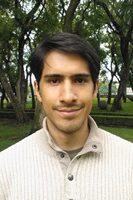
Francisco was born in Mexico City, Mexico. There he graduated with a BSc in Physics from the National Autonomous University of Mexico, in which he developed a final research project on Random Lasers. After that, he obtained the MSc degree in Materials Science and Engineering from the same university. In his masters project he worked in deposition and self-assembling techniques of gold thin films. He joined the Organic Semiconductor Optoelectronics group in September 2014 as a PhD student. He worked on single molecule spectroscopy of conjugated polymers at the OSC, under the co-supervision of Prof Ifor Samuel and Dr Carlos Penedo-Esteiro.
 Dr Dimali Vithanage
Dimali graduated with a BEng (Hons) in Electronics and Communications Engineering from the University of Bath in 2003. The following year she went on to receive a MSc distinction in Photonics and Optoelectronic Devices jointly from the Universities of St Andrews and Heriot Watt. In September 2004 she joined the Polymer Optoelectronics group to start a PhD under the supervision of Prof Ifor Samuel. Her research was on parametric and polymer amplifiers using ultrafast spectroscopy. In 2008 Dimali joined the Laboratory of Ultrafast Spectroscopy at the Ecole Polytechnique Federale de Lausanne (EPFL) under Prof Majed Chergui in Switzerland. At EPFL, she was part of a team to build a MHz detection, X-ray absorption pump probe set up at the Swiss Light Source synchotron at the Paul Scherrer Institute. In 2009 she started as a postdoctral fellow at Lund University in Sweden, under Prof Villy Sundstrom on investigating the dynamics of solar cell materials using time resolved techniques. In late 2012 she came back to work for Prof. Ifor Samuel here in St Andrews to work on photophysics of organic semiconductors.
 Dr Alex Thompson
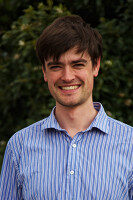
Alex Thompson was awarded a BEng (Electronics and Computer Systems)/BSc (Research and Development) from Swinburne University of Technology, Melbourne, Australia in 2010. He remained at Swinburne to perform a PhD in Biomedial Engineering with Prof. Paul Stoddart. His PhD project investigated novel optical techniques to stimulate neurons in the cochlea, with the aim of replacing conventional electrical stimulation. In December 2014 he joined the group to develop a wearable sensor of erythema in collaboration with the Photobiology Unit at Ninewells Hospital, Dundee.
 Dr Thomas Roland
Thomas received his BEng in 2009 at the Strasbourg National Superior School of Physics, France. During the last year internship, he worked in Stefan Haacke research group “biodyn” (CNRS, IPCMS). He continued in the group, recieving a Masters (nanophotonics), and PhD (entitled “ultrafast spectroscopy of new organic molecules for photovoltaic applications”) in 2014. Since graduating, Thomas has performed post-doctoral research on up/down conversion, and a brief stop in Sweden (working on a SLM). He joined St Andrews as a Research Fellow in August 2015.
 Dr Euan Shaw
Euan was born in Dumfries in the south west of Scotland. He obtained his MPhys degree in physics in 2011 from the University of St Andrews and carried on under the supervision of Dr Carlos Penedo to obtain his PhD in the field of single-molecule biophysics from the same university. He joined the Organic Semiconductor Centre upon the completion of his PhD in September 2015 as a Research Fellow to begin working on developing direct methods to measure exciton diffusion.
 Dr Guy Whitworth
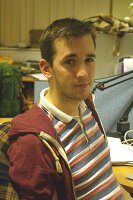
Guy was born in London. He graduated with an MPhys in physics and astronomy from the University Southampton in 2012. For his Masters project Guy preformed studies in organic photovoltaic devices and their integration with nano-crystalline quantum dots. Guy joined the group in 2012 for his PhD and is investigating into the excited state interactions hindering organic optoelectronic devices in specific regard to organic solid-state lasers.
Past group member’s data is published here on the lawful basis of being a public task, and the purpose is to support the work of the research group. If you would like your data removed and/or ammended please contact [email protected] .